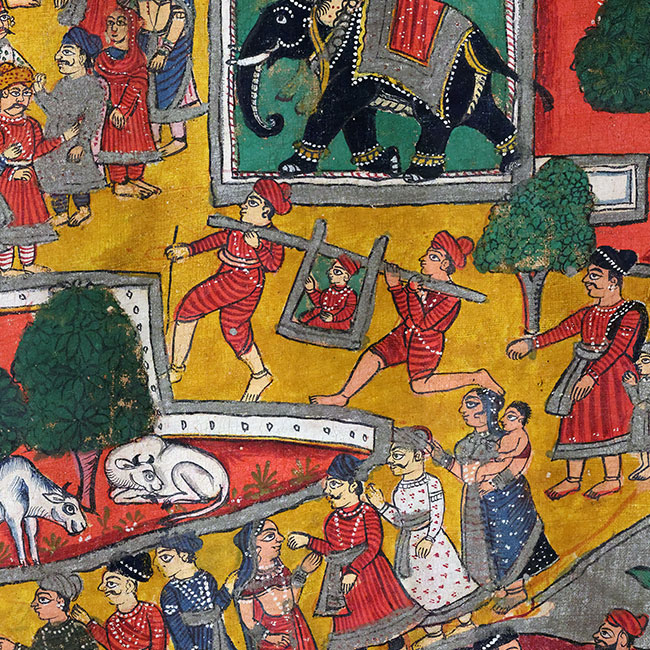
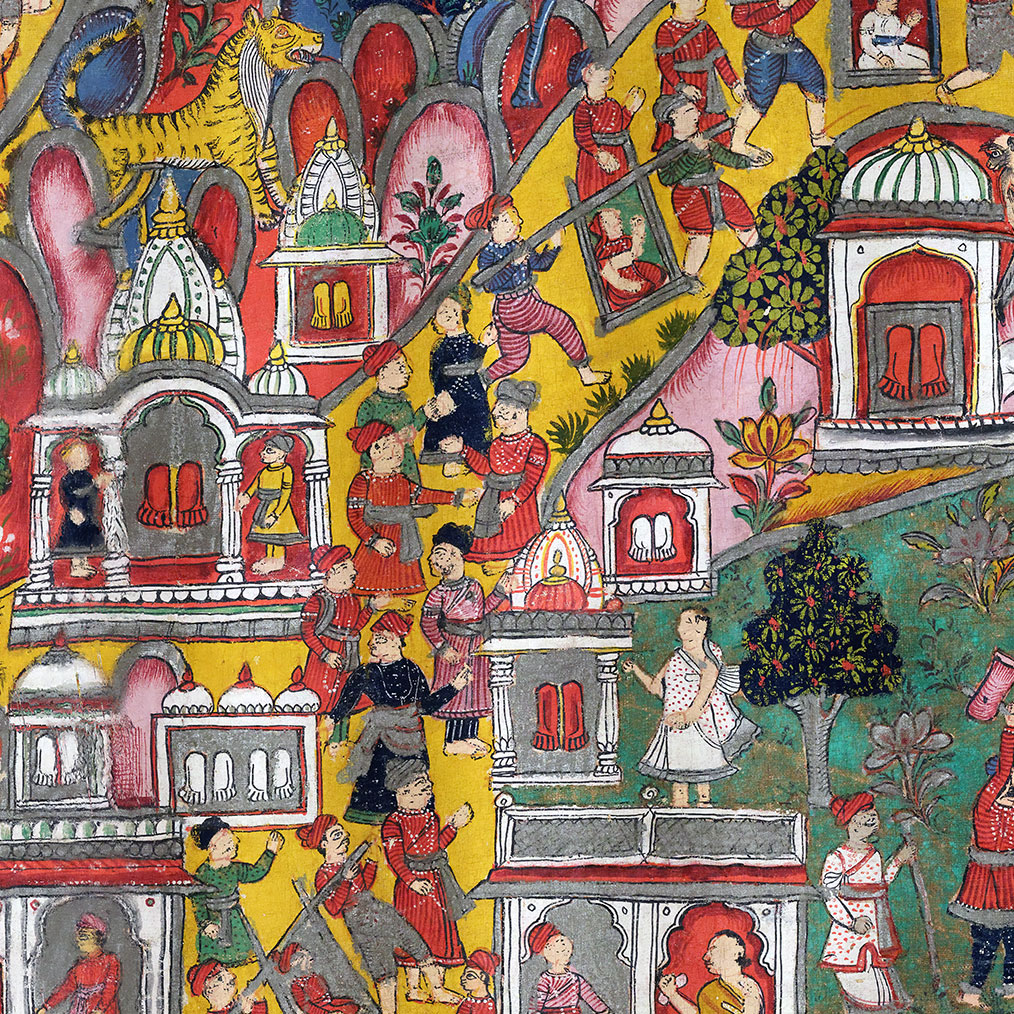
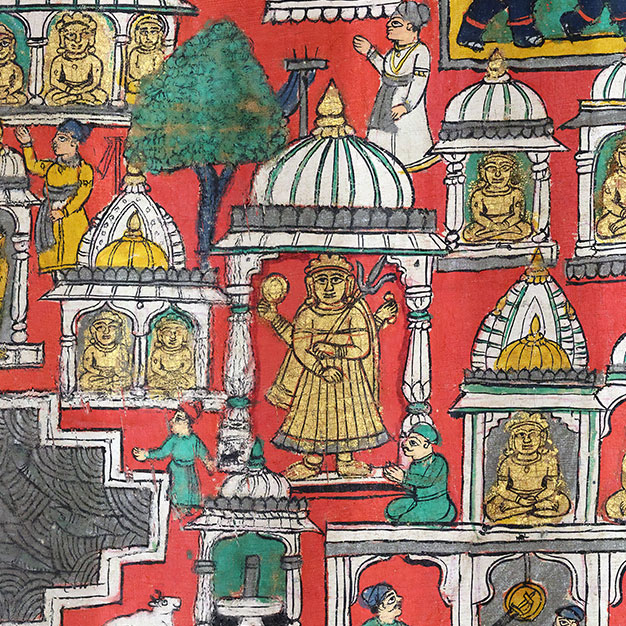
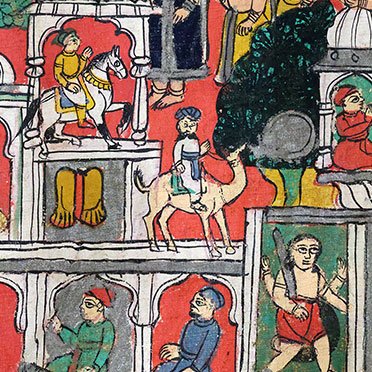
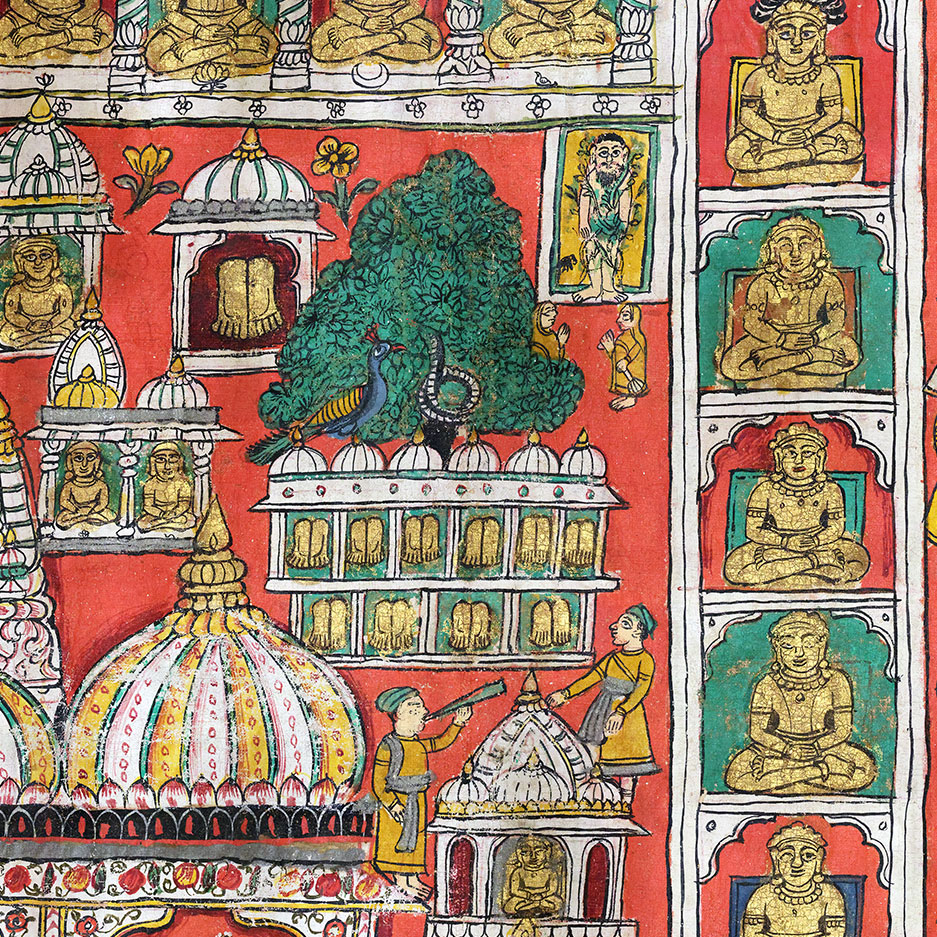
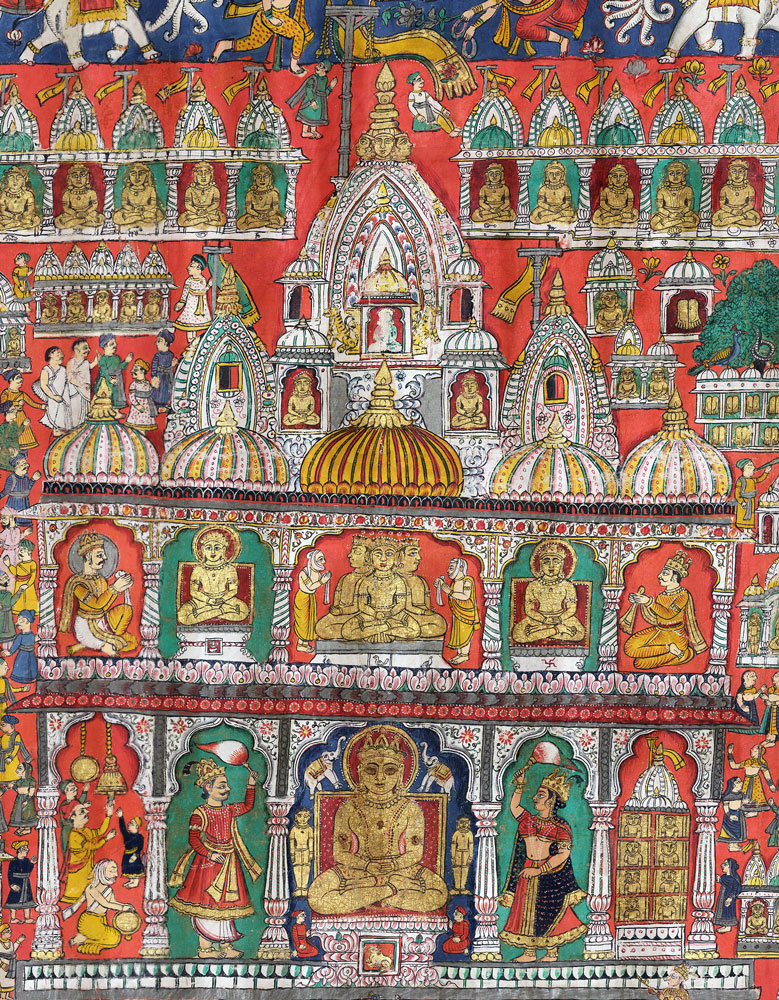
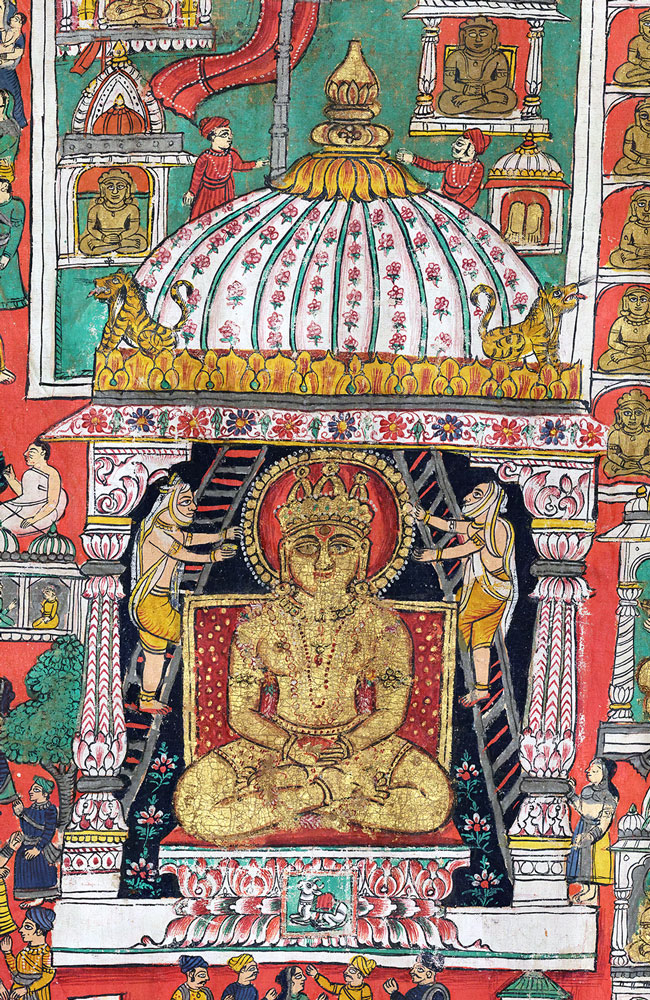
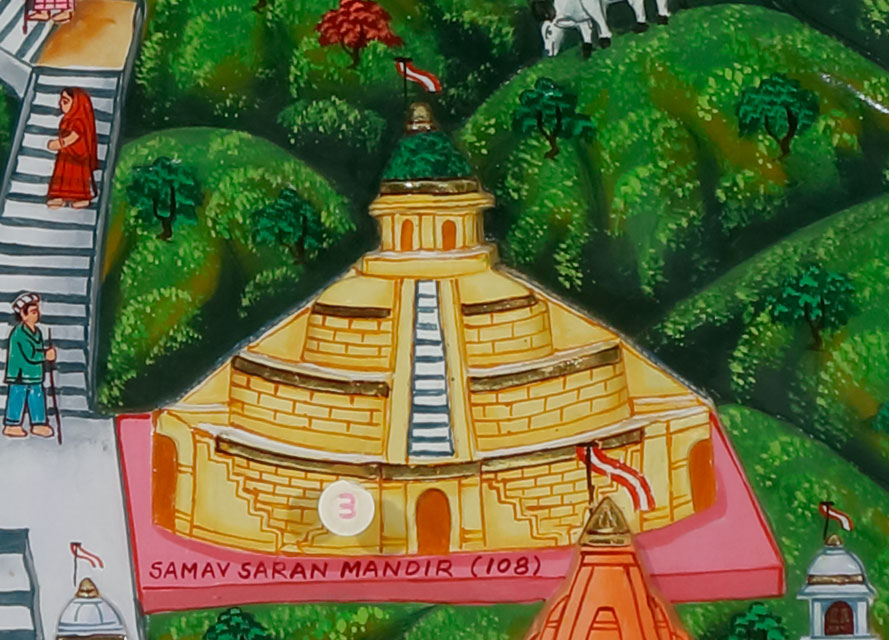
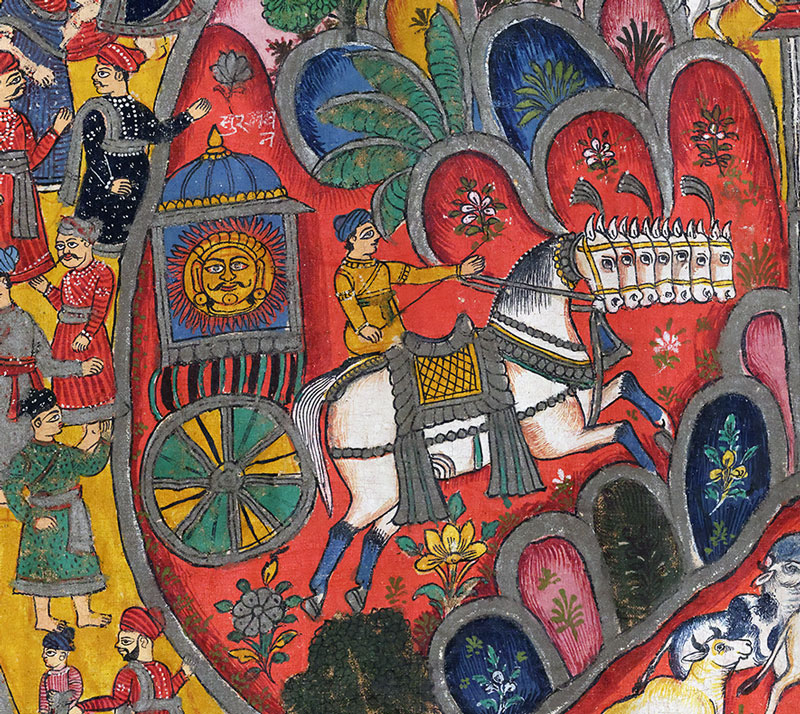
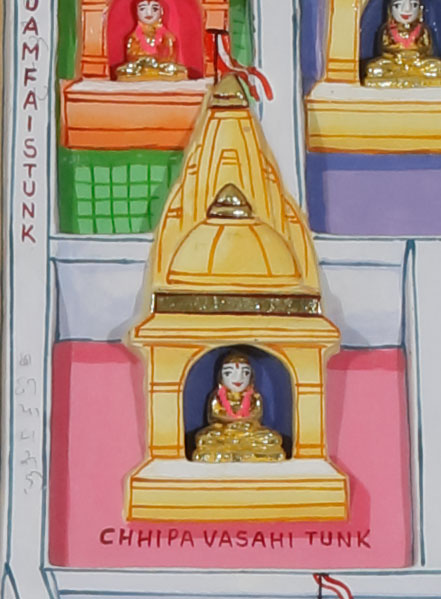
This eleven-foot-tall cloth map, painted in western India around the turn of the nineteenth century, depicts one of the most important Jain pilgrimage places, the Shatrunjaya Hills, in the Indian state of Gujarat. For Shvetambaras — followers of one of the main sects of Jainism — this King of Mountains (Giriraj) is eternal. Adinatha, the first of the twenty-four tirthankaras, or enlightened founders of Jainism, came here trillions of years ago and preached at the base of a rayan tree atop the hill. Following Adinatha, innumerable people have come to this hill, died, and achieved liberation from the cycle of rebirth. To commemorate this place of liberation, Jains, beginning around the sixth century CE, have constructed hundreds of tunks, or temple complexes, atop the hill. Hundreds of shrines also line the path of over 3,750 steps from the city Palitana at the base of the hill, in the lower right, to the rayan tree and main temple to Adinatha at the top of the hill, in the upper left of the painting.
Tap on the numbers on the painting to learn more about the trek up the hill.
Then turn off the hotspots. Can you zoom in and find:
- A cross between a dog and an alligator?
- A standing elephant-headed deity?
- A seated person with long hair and blue skin?
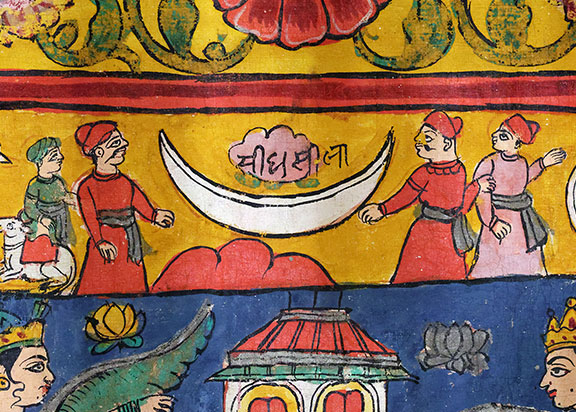
- A crescent moon?
- Women drawing water from a well?
Zoom out and tap on each of these hidden items for more information.
A painting like this one would have been made for the wall of a Jain temple, monastery, or private residence. To this day, many Shvetambara temples, including the one at the Jain Society of Greater Atlanta, will contain a map of Shatrunjaya.